

Firebird and Dell Technologies to Power Armenia’s AI and Digital Future
November 23, 2025
NVIDIA Unveils New Open Models Data and Tools to Advance AI Across Every Industry
January 6, 2026'Horizon' Supercomputer Will Make Austin the Center of U.S. Research Power

AUSTIN, Texas — The next wave of scientific discovery
is being built right here in Central Texas.
The Texas Advanced Computing Center (TACC) at The University
of Texas at Austin is teaming up with Dell Technologies and NVIDIA to launch
Horizon, which will become the largest academic supercomputer in the United
States when it goes online in 2026.
Designed to be a major engine for open science, Horizon will
help researchers tackle some of the toughest problems of our time—from extreme
weather forecasting to medical breakthroughs to national security.
A Texas-sized leap in computing power
Horizon will deliver 300 petaflops of performance—making it
ten times faster than TACC’s current supercomputer, Frontera. For researchers,
that means bigger projects, faster insights, and entirely new possibilities.
“It’s really exciting for Austin and for the University of
Texas,” said Dan Stanzione, Associate Vice President for Research at UT and
Executive Director of TACC. “We’ll have the largest academic computing resource
in the country. Researchers will have unparalleled access to computing anywhere
in the world.”
A supercomputer built in Central Texas
Horizon isn’t just located in Austin—it’s being built here,
too.
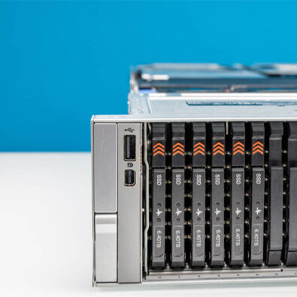
Dell is designing the integrated racks.
Final assembly is happening in Georgetown.
The system will be housed in a Round Rock data center.
NVIDIA chips and VAST storage—both companies with Austin
teams—power the hardware.
“Everyone involved has an Austin tie,” Stanzione said.
“Finally deploying one of these major systems in the Austin area is pretty
exciting.”
What Horizon will do
In its first year, TACC expects hundreds of research
projects to run on Horizon. Some of the earliest will focus on Texas-specific
challenges, such as:
More accurate hurricane and storm surge forecasts
Disaster resilience modeling for the Gulf Coast
Healthcare and drug discovery
New materials and battery development
Horizon will also become the AI hub for UT Austin, enabling
breakthroughs in machine learning and large-scale data analysis.
Keeping a giant cool
Running a supercomputer this large takes serious
engineering. Each cabinet draws around 225,000 watts, requiring advanced
cooling solutions.
Propylene glycol will flow directly across the chips, while
chilled water circulates through rear-door radiators. In total, the system will
move about 400,000 gallons of water per hour to keep everything stable.
What Dell says
For Dell Technologies, Horizon is a major step forward for
the region and the research community.
“Horizon delivers over 300 petaflops of performance—ten to
twelve times faster than Frontera,” said Seamus Jones, Director of Server
Engineering. “It will help researchers break boundaries and drive advancements
in technologies we haven’t even imagined yet.”