


Dell, Nutanix Expand Storage Partnership With New PowerStore Offering
October 30, 2025
We need secure products as much as we need security products
November 1, 2025Five ways to build real cyber resilience

COMMENTARY: New findings from Dell’s Cyber Resilience
Insights research reveal why overconfidence can be a liability—and what
executives must do to build true resilience.
When it comes to cyber resilience, confidence is a
double-edged sword. On one hand, it unites teams and inspires trust. But when
confidence overshadows reality, it can leave vulnerabilities undetected—waiting
to unravel when the stakes are highest. We call this the confidence–capability
gap, and for many organizations, it represents a significant, unaddressed risk.
[SC Media Perspectives columns are written by a
trusted community of SC Media cybersecurity subject matter experts.]
The latest Dell Cyber Resilience Insights research
underscores this disconnect. More than two-thirds (69%) of IT leaders believe
their executive leadership overestimates their organization’s readiness for a
major cyber event. It’s a correct perception, as 53% of organizations failed to
fully recover during their most recent drill or incident. The data shows that
many enterprises operate with a false sense of readiness, even as the threat
landscape grows more complex and disruptive.
This gap often stems from an over-reliance on prevention
alone. While crucial, a prevention-first mindset can create a false sense of
security, leaving organizations vulnerable when an incident inevitably occurs.
In fact, our research shows a clear imbalance, with most organizations (86%)
prioritizing prevention over recovery.
Human nature also plays a role in this disconnect. Although
cyber threats remain ever-present, the perception that “we’ve spent enough on
prevention and haven’t had a major issue yet” can lead to a false sense of
confidence. Additionally, there’s often a reluctance to challenge leadership
with hard truths about an organization’s cybersecurity posture, further
perpetuating the gap.
The good news: maturity makes a measurable difference.
Organizations with mature cyber resilience strategies are nearly three times
more likely to recover successfully from a cyber incident than their less
advanced peers. Their results prove that resilience is achievable when it is
treated as a discipline—continuously tested, validated, integrated, and
automated.
The stakes are higher than ever
It’s tempting to think about cyber resilience purely in
terms of technology—firewalls, backups, and detection platforms. But we
determine resilience not by isolated tools, but by how well systems work
together under pressure. A failed service level agreement (SLA) isn’t
just a number on a dashboard; it’s an outage, a loss of data, and a hit to
customer confidence.
The challenge gets compounded by the speed of AI-driven
threats. Ransomware now
targets the unstructured data critical to AI workloads, and adversaries are
experimenting with techniques that manipulate or corrupt data to influence
outcomes. As attackers evolve, they exploit not only the gaps between systems
but also the imbalance in many organizations’ security approaches.
Fortify the future with AI
AI has become an impetus for progress, but its value depends
on the trustworthiness of the data that feeds it. The research shows that many
organizations are already using AI and machine learning to strengthen their
cyber defenses. For example, 62% use it to scan backup data for indicators of
compromise, and organizations with more mature strategies are far more likely
to adopt AI-driven playbooks for mitigation and recovery.
This is a critical trend. Cybercriminals are automating
their tactics, and forward-thinking organizations are responding in kind.
Automated detection and recovery not only close the gap against evolving
threats but also simplify the process of testing resilience. When recovery
workflows depend less on manual processes, organizations can validate their
readiness more frequently and with greater confidence.
Imperatives for building real resilience
The research makes one point clear: resilience does not get
defined by how confident an organization feels, but by how consistently it can
recover when it matters most. A few imperatives stand out:
·
Protect the crown
jewels: Identify the data and systems without which the business
cannot function, and ensure they remain uncompromised, even under the most
extreme conditions.
·
Detect the quiet
disruptions: Modern threats often manifest as subtle anomalies, like
rogue deletions or corrupted datasets. These are easily missed without
continuous monitoring and AI-driven threat detection to shorten response times.
·
Test recovery readiness
often: Recovery isn’t defined by having a plan, but by how often that
plan is practiced and refined. The evidence is clear: organizations that test
their recovery monthly or more frequently are far more likely to meet their
SLAs and achieve successful outcomes.
·
Integrate across the
lifecycle: Mature organizations show that resilience is more than a
set of tools. By connecting prevention, detection, and recovery practices, they
reduce blind spots and ensure testing translates into effective real-world
results.
·
Balance innovation with
protection: Emerging technologies like AI create extraordinary
opportunities but also new vulnerabilities. The most advanced organizations
embed resilience into their innovation roadmaps so that progress is protected,
not paused, when threats strike.
While it's within our reach to close the
confidence–capability gap, it requires decisive action. Organizations can no
longer rely on unproven strategies or the assumption that past prevention
measures alone guarantee readiness. By frequently testing, integrating
defenses, and adopting automation, you can build a resilient foundation for
your business.
Sustaining that resilience over time demands more than
technical measures—it requires a cultural shift. IT leaders must feel empowered
to present an honest assessment of their organization’s security posture, and
executives must confront uncomfortable truths. When leadership understands the
operational realities and IT teams grasp the strategic priorities, cyber
resilience can and will work.
Varun Chhabra, senior vice president of
infrastructure, telecom and cyber resilience marketing, Dell Technologies
SC Media Perspectives columns are written by a trusted
community of SC Media cybersecurity subject matter experts. Each contribution
has a goal of bringing a unique voice to important cybersecurity topics.
Content strives to be of the highest quality, objective and non-commercial.
Related Articles

When are attacks truly driven by AI?
February 25, 2026 0
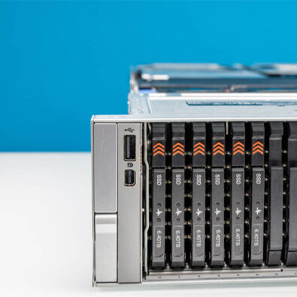
Dell PowerEdge R770 Review A Fluid New 2U Server
February 18, 2026 0
Scalar Tape Storage
February 15, 2026 0Why Certification Has Become a Strategic Control for CISOs
February 15, 2026 0